
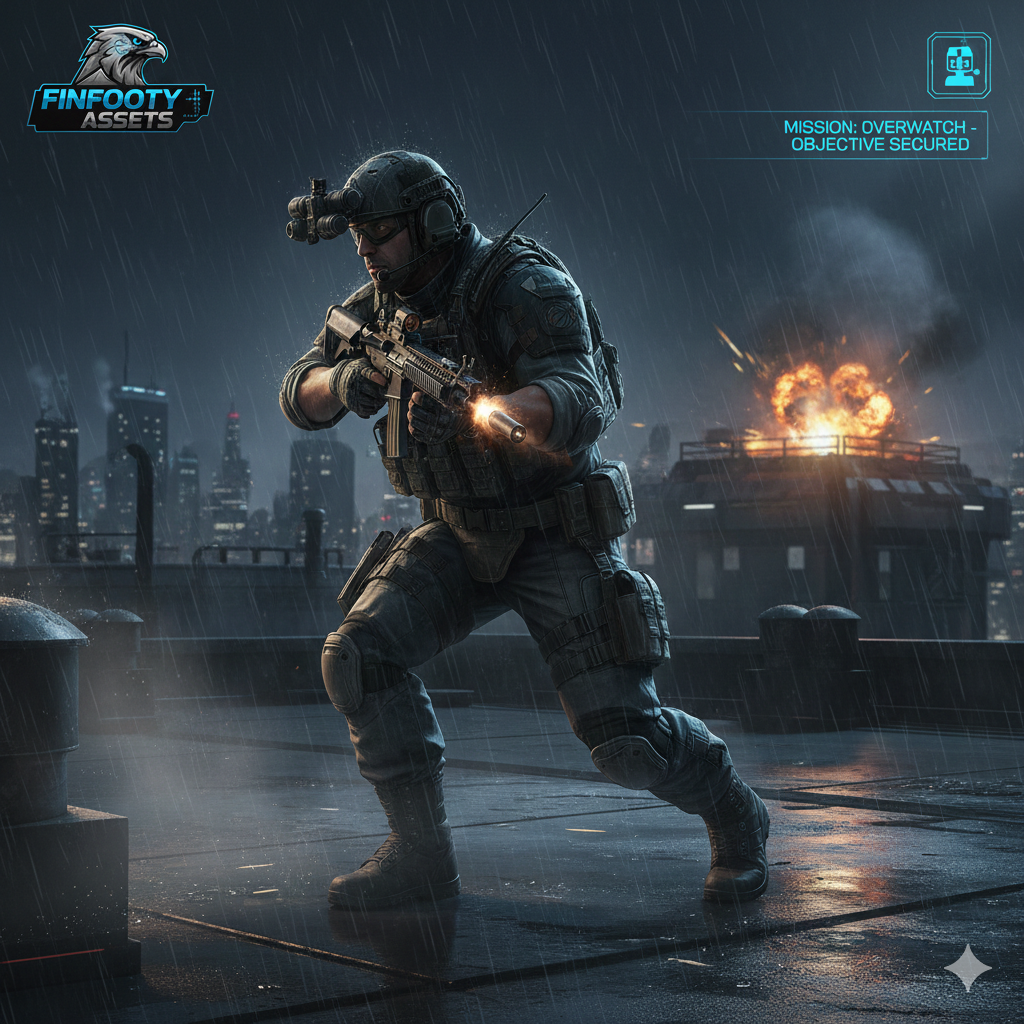
What is gameplay of FPS game?
Here is a breakdown of what constitutes Gameplay in an FPS:
1. The Core Combat Loop
This is the “heartbeat” of the game. It is often summarized as “Move, Aim, Shoot, Kill.”
Gunplay: The feel of the weapons. This includes recoil patterns, reload speeds, bullet physics (hitscan vs. projectile), and “weapon sway.”
Time-to-Kill (TTK): How long it takes to eliminate an enemy. A “fast TTK” feels like Call of Duty, while a “slow TTK” feels more like Halo or Apex Legends.
2. Movement Mechanics
How the player navigates the 3D space. Movement defines the “pace” of the gameplay.
Basic Movement: Walking, sprinting, crouching, and jumping.
Advanced Maneuvers: Sliding, wall-running, leaning (tactical peaking), or “bunny hopping.”
Tactical Movement: How players use cover and positioning to gain an advantage.
3. Tactical Systems & Abilities
In modern FPS games (like Valorant or Overwatch), gameplay includes more than just shooting.
Utility: Using grenades, smoke screens, or flashbangs to control the battlefield.
Hero Abilities: Ultimate moves, healing, or scouting drones that add a layer of strategy.
4. Level Design & Flow
The way an environment dictates how the game is played.
Choke Points: Areas where players are forced into conflict.
Verticality: Using rooftops or high ground to change the combat dynamic.
Sightlines: Long paths for snipers versus tight corners for shotguns.
5. Game Modes & Objectives
The “Rules of Engagement” that give the gameplay purpose.
Examples: Team Deathmatch (pure combat), Search and Destroy (tactical/one-life), Capture the Flag (movement-based), or Battle Royale (survival-based).